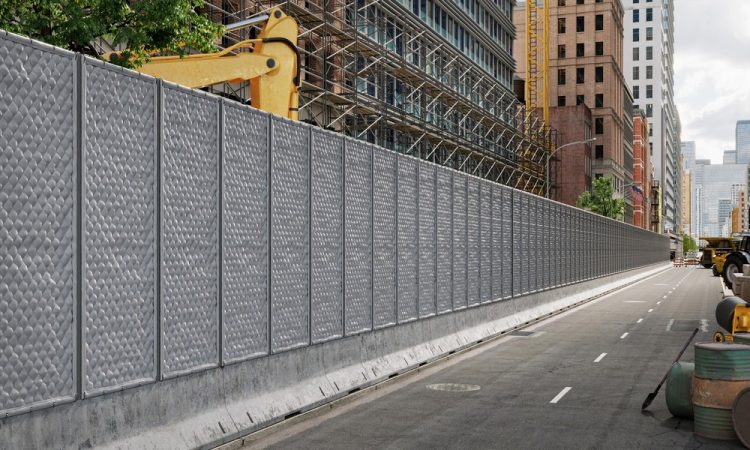
On most construction sites, installing a sound barrier feels like one of those straightforward tasks. Set up the panels, secure them along the perimeter, and you’re done, right?
Not quite.
In real site conditions, a sound barrier for construction is only as effective as how it’s installed and managed over time. And because construction sites are constantly changing, even a “properly installed” barrier at the start can quickly become less effective if small details are overlooked.
The tricky part is that most of these mistakes aren’t obvious. Everything can look complete on the surface, but noise still leaks out more than expected.
Let’s walk through the common installation gaps that tend to show up on active sites and why they matter more than they seem.
Small gaps that quietly reduce performance.
This is probably the most underestimated issue.
During installation, panels might not align perfectly. Maybe there’s a slight gap between sections, or edges aren’t fully sealed.
It doesn’t look like much.
But sound behaves differently than we expect. It doesn’t need a large opening-it just needs a path.
Even small gaps can:
- Let sound pass through directly
- Reduce the overall effectiveness of the barrier
- Create weak spots where noise escapes more easily
For construction sound barriers, consistency is key. A continuous, well-sealed setup performs far better than one with even minor breaks.
Treating the perimeter as the only solution.
A lot of sites rely heavily on perimeter barriers.
It makes sense-it’s the boundary between the site and the outside world.
But here’s the catch: by the time sound reaches the perimeter, it has already spread across the site.
So if barriers are only placed along the edges:
- Noise has already built up internally
- Sound energy is stronger by the time it hits the barrier
- Some noise may already escape through indirect paths
That’s why many projects benefit from combining perimeter barriers with internal control-especially around high-noise zones.
Placing barriers too far from where noise actually happens.
This ties closely to the perimeter issue.
If a barrier is too far from the noise source:
- It becomes less effective at blocking sound early
- More noise spreads within the site before being controlled
- The barrier ends up doing less “work” than it should
In real conditions, moving barriers closer to equipment like generators, drilling zones, or cutting areas can significantly improve performance.
Sometimes, it’s not about adding more barriers-it’s about placing them better.
Using the same barrier height for everything.
Not all construction noise is the same.
Some activities produce low, steady sounds. Others-like piling or demolition-create strong, high-impact noise that travels further.
A common mistake is using a uniform barrier height across the entire site.
But if the barrier is too low:
- Sound can easily travel over it
- Upper floors of nearby buildings may still be affected
- Noise control becomes inconsistent
Different zones may need different heights depending on what’s happening there.
It’s a small adjustment that can make a big difference.
Forgetting that sites change constantly.
This is where many installations fall short over time.
Construction sites don’t stay the same:
- Work zones shift
- Equipment gets relocated
- New phases introduce different noise sources
But sometimes, the barrier setup stays exactly as it was on day one.
That’s when gaps start to appear, not physically, but in coverage.
This is why sound barrier systems are often preferred. They allow teams to:
- Reposition panels as work moves
- Reinforce areas during louder phases
- Adjust coverage without major reinstallation
Flexibility is what keeps the system effective throughout the project.
Loose installation and lack of maintenance.
Even when barriers are installed correctly, they can lose effectiveness if they’re not properly secured or maintained.
On active sites, barriers are exposed to:
- Wind
- Vibrations from machinery
- Daily wear and tear
Over time, this can lead to:
- Panels loosening
- Openings forming between sections
- Reduced stability and performance
In some cases, loose panels can even create additional noise when they vibrate.
Regular checks might seem like a small effort, but they go a long way in maintaining consistent noise control.
Not reinforcing during high-noise phases.
Construction noise isn’t constant-it peaks during certain activities.
Think about:
- Piling works
- Heavy drilling
- Demolition
These phases produce much stronger noise levels compared to regular construction tasks.
A common mistake is keeping the same barrier setup throughout the entire project.
In reality, these peak periods often require:
- Extra layers of barriers
- Thicker or more absorptive materials
- Temporary enclosures around specific equipment
Without reinforcement, the system that worked earlier may struggle when noise levels increase.
Treating installation as a “set and forget” task.
This might be the biggest misconception of all.
Installing a barrier is often treated as a one-time job. Once it’s up, attention shifts elsewhere.
But in real construction environments, that approach doesn’t hold up.
Effective construction sound barrier installation is ongoing. It involves:
- Monitoring how well the barrier is performing
- Adjusting placement as the site evolves
- Fixing small issues before they become bigger problems
It’s less about installation and more about continuous management.
Final Thoughts
A construction sound barrier might look simple from the outside, but its effectiveness depends on a lot of small, practical details.
Most issues don’t come from the barrier itself. They come from how it’s installed, positioned, and maintained over time.
When contractors pay attention to things like:
…they get far better results from their construction sound barriers without needing major changes or added cost.
And in real projects, that’s what matters-making sure noise control actually works, not just on paper, but in everyday site conditions.