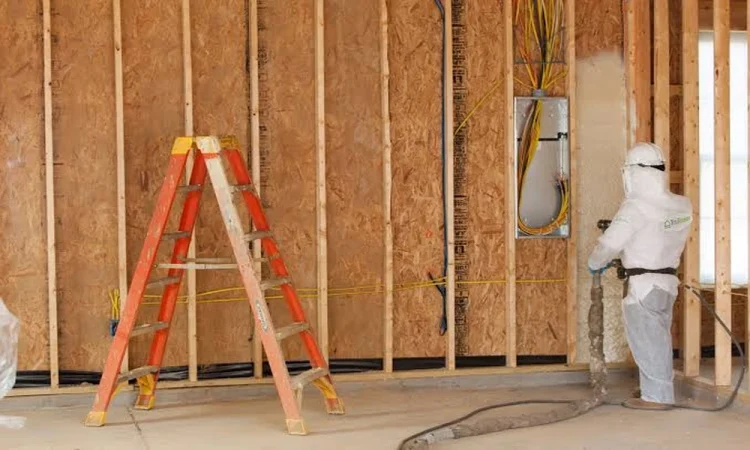
Expanding foam is a quick, dependable means of filling gaps and enhancing insulation on numerous trades. Effective product choice, method of application and preparing sites can determine how businesses can utilize expanding foam well. This article describes the techniques of achieving consistent, professional results in practice.
Explaining how to use expanding foam effectively
Why expanding foam suits many trades
Foam expansion seals irregular cracks, which other materials can hardly cover. Its expansion properties aid the insulation and draught-proofing of construction and renovation work. Foam is used by businesses in various trades, in order to provide speed and reliability. Such reasons as to why expanding foam is becoming popular are:
- Gap-filling versatility: Foam which expands to fill irregular cavities not properly accessible to rigid materials.
- Insulation support: Enhanced thermal performance around a building of windows, doors and structural penetrations.
- Time efficiency: Rapid time to cure, saves time in general as compared to traditional filling technique.
- Sound dampening: Less noise transmission, using closed cavities in internal and external walls.
Choosing the right foam for the job
Not every growing foam product is as adaptable to all applications. It is usually the businesses that decide among the formulations used, depending on the rate of expansion, densities and intended purposes. The appropriate choice of the product eliminates wastage and minimizes chances of problems during its application. Such factors as should be taken into consideration when selecting foam are:
- Expansion rate: Choose foam to fit the size of the gap, not too much overflow or not enough fill.
- Application method: Selecting the type of gun-applied or straw-applied foam with job-specific size and precision requirements.
- Fire performance: Choose fire-rated foam where necessary in agreement with the building regulations.
- Curing time: Take into consideration the fastness with which a project timeline needs the foam to be completely cured.
Preparing the site before application
The performance of expanding foam after application is highly dependent on the way it is prepared. Omission of preparatory steps may result in either lack of adhesion or in poor expansion outcomes. A brief preparation schedule enhances the uniformity of all occupations. Some preparation steps that can be followed would include:
- Surface cleaning: Removing dust, debris or loose material prior to application to enhance the quality of adhesion.
- Moisture check: Lightly wetting of surfaces where advised, conducive to correct curing of some types of foam.
- Gap assessment: Pre measure gap size to choose a foam application of suitable size.
- Protective covering: Coating immediate surroundings to prevent unintentional contact with foam when applying.
Applying foam correctly for reliable results
The technique used in applications has a direct impact on the performance of foam after full drying. Any type of overfilling or underfilling a gap will result in unnecessary rework. A common approach within a team helps to achieve more predictive project results. Some tips that can be followed when using the applications are:
- Partial gap filling: Filling the gaps half way, and then leaving space to enable natural foam expansion.
- Steady application speed: Consistency in the rate of application of foam, avoiding uneven in its distribution across the gap.
- Layered application: Use layers of foam on bigger gaps, to enhance the general stability and finish.
- Trimming after curing: Cutting of the excess foam after curing, resulting in a clean and professional finish.
Storing and handling foam correctly
Storing properly will impact the success of expanding foam once it has been opened to be utilized. Improper storage can decrease the efficiency or decrease shelf life of the product. Basic handling instructions guard the product quality as well as business expenditures. Practices that should be followed in storage include:
- Temperature control: Cans that are stored at the recommended temperatures to ensure that the product performance remains the same.
- Upright positioning: Maintaining cans in an upright position were advised to allow even flow of products when applying.
- Sealed storage: Cans not yet open are placed in a dry, sealed area to preserve their shelf life.
- Stock rotation: The older stock should be used first and the risk of having to spoil the product with time is minimized.
Conclusion
The success of expanding foam relies upon proper product choice, preparation and application method with regard to successful use by businesses. Prevention of some of the frequent errors prevents the inconsistent quality of multiple projects. In most trades, use of expanding foam must be cautious and consistent to ensure faster and more reliable outcomes.